
Connect any AI agent. The rules follow.
Connect the AI agent your team already uses, and your rules come with it. They are not a document somebody hopes was read: they are applied at the moment a tool is used, every time, whoever is asking.
The rules arrive before the first call
The moment an AI agent connects, the server hands it a short brief: which kinds of action need a human, which packages your organisation has approved, and, when the connection names a project, that project's rules and instructions. The model is told what it may touch before it acts, rather than finding out when it is stopped.
A reason, on anything that changes something
A tool that can change something asks the AI agent to say why, in plain language, and the server refuses a placeholder like test or n/a. The reason is filed with the call, and on a permanent action it is the case the reviewer reads before saying yes.
- Read-only tools just run.
- Reversible tools run now and are recorded, because putting them back is possible.
- Permanent tools do not run. The AI agent gets a reference number and a place to wait.
The role decides what an AI agent can even see
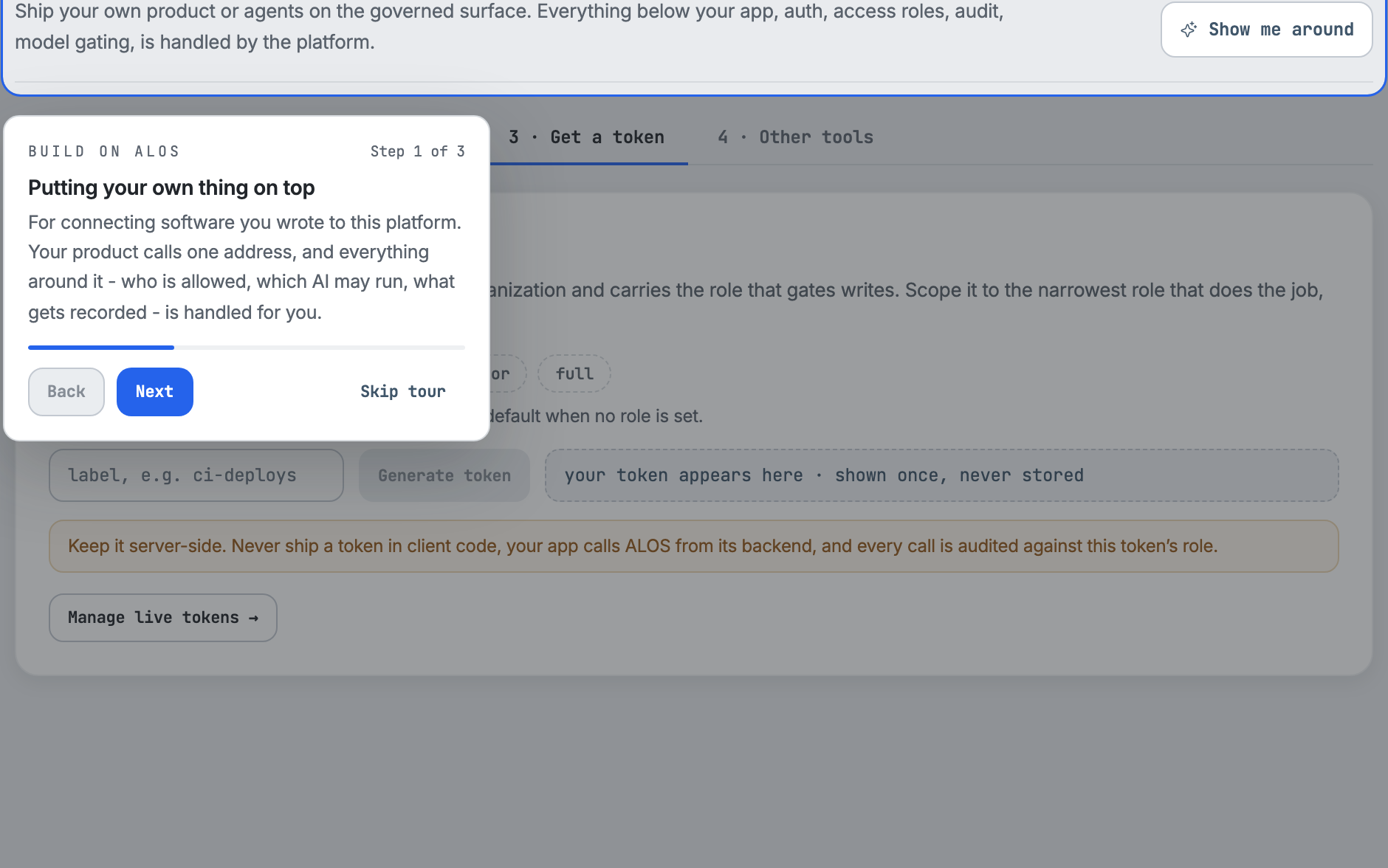
Every sign-in carries a role, from read-only up through a few narrow ones, an instruction author or a project operator or an apprentice, to full access. The role decides which tools the AI agent is shown, and is checked again when one is used. Each tool has to be registered in six places at once, and a test refuses one that is missing from any of them.
Name the project you are working on
A connection can say which project it is for, and then everything it does counts toward that project's rulebook and its checks. A connection that names no project still works. It is filed against the organisation instead, and it says so, so nobody mistakes it for evidence a project does not have.
Sign in the standard way
The server publishes the sign-in details in the format AI agent software already knows how to read, so a tool that supports it connects without anybody copying a key around. The exact behaviour is in the developer docs. For everything else, one sign-in from the Integrate page and one line of setup.
The one line that connects your AI agent is in the developer docs.
Also in AI management system
- AI agents and their workGive an AI agent a job, then read back every step of it.Read the page
- SandboxA machine of its own per session, and your keys stay out of it.Read the page
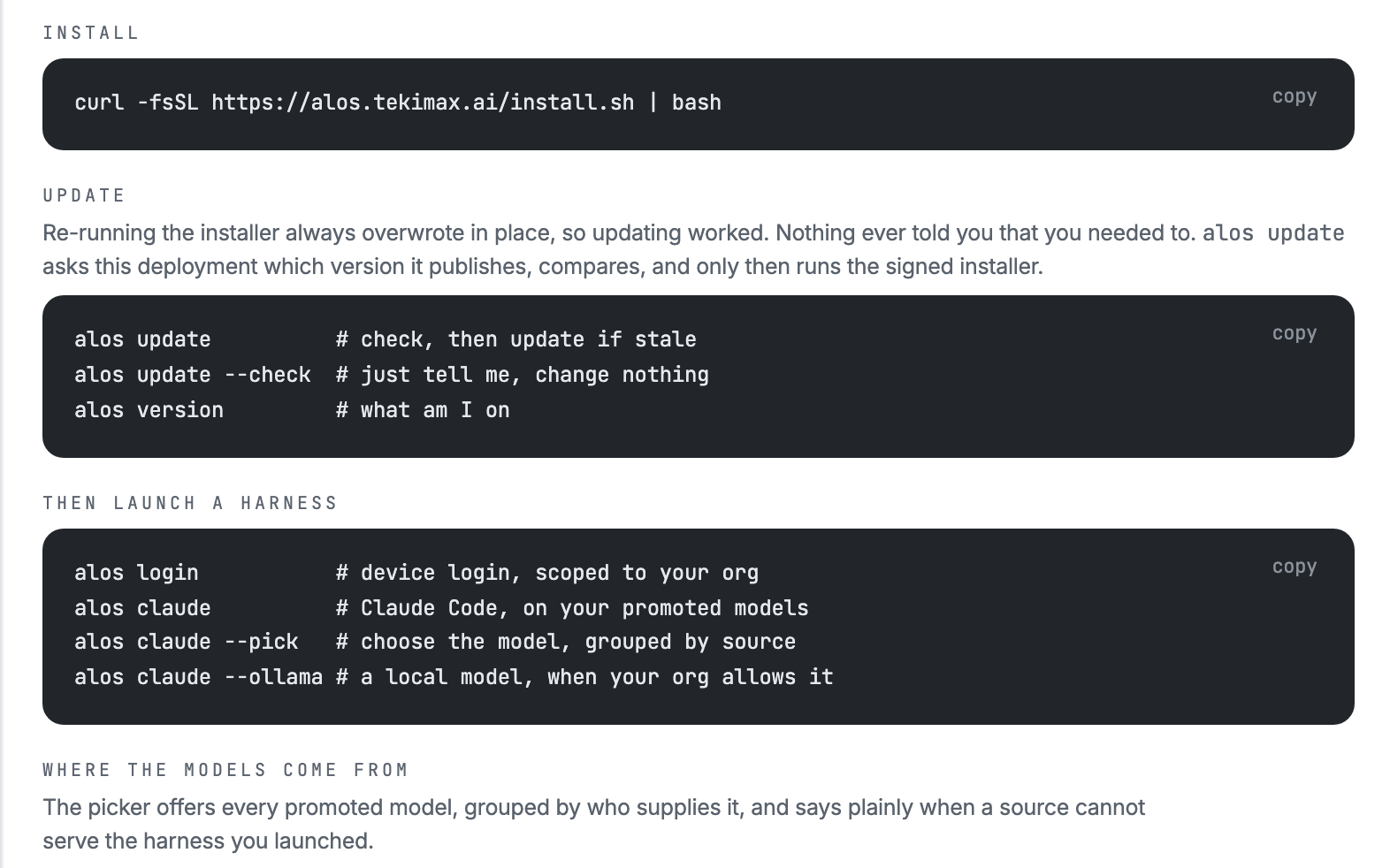
- Command lineThe terminal your engineers already use, on your rules.Read the page
- Client SDK and APIOne typed client for the whole platform, given to your team.Read the page
- Apprenticeship programmeA registered programme where you advance by what you can do.Read the page